The Hidden Risks Behind Business Expansion

Business expansion creates new opportunities, but also introduces risks that can threaten operational continuity and financial stability. As companies prepare for 2027, understanding these hidden exposures and ensuring adequate protection will be essential to building sustainable business growth.

Is Your Company Ready for 2027?

Business expansion is often seen as a sign of success. New investments, increased production capacity, infrastructure development, and growing market opportunities create optimism for the future. However, growth also introduces new risks that may not always be visible in a company’s business plan.

As businesses prepare for 2027, the challenge is no longer simply how to grow, but how to remain resilient when unexpected events disrupt operations, threaten assets, or affect financial performance.

A company may have a strong growth strategy and comprehensive insurance policies, yet still face significant exposure if its risk management approach has not evolved alongside its business.

The critical question is: Is your business prepared not only to grow, but also to withstand the risks that come with that growth?

Business Growth Is Changing the Risk Landscape

Business Growth Is Changing the Risk Landscape

Indonesia's business environment continues to offer opportunities across multiple industries. Infrastructure investment, energy transition, mining downstreaming, manufacturing expansion, and the development of supporting logistics networks are creating new possibilities for companies to increase capacity and enter new markets.

However, these opportunities also introduce increasingly complex operational and financial exposures.

Business expansion rarely happens in isolation. A new production facility depends on reliable electricity, machinery, raw materials, logistics, skilled personnel, and regulatory compliance. A construction project relies on contractors, equipment suppliers, engineering specifications, financing, and timely delivery. Meanwhile, energy and mining investments involve extensive infrastructure, technical operations, environmental considerations, and contractual obligations.

Each additional business activity creates new dependencies. When one part of the system fails, the consequences can extend far beyond the immediate incident.

Consider several developments across Indonesia's key industries.

Mining and Downstreaming

The expansion of mineral processing and downstream industries creates opportunities for investment in mining facilities, processing plants, heavy equipment, and supporting infrastructure. However, companies must also address operational reliability, contractor performance, regulatory compliance, and the protection of increasingly valuable assets.

Power and Renewable Energy

The growing demand for electricity, including from data centers, is accelerating investment in power generation and supporting infrastructure. Renewable energy projects also introduce additional requirements involving construction quality, equipment reliability, grid connectivity, water availability, and operational continuity.

Construction and Engineering

Infrastructure and energy projects create significant opportunities for contractors and EPC companies. Yet complex project schedules, equipment procurement, engineering changes, and commissioning requirements can create financial exposure when delays occur.

Manufacturing

Increasing production capacity and the adoption of automation may improve productivity. However, manufacturing businesses remain dependent on machinery reliability, uninterrupted utilities, raw material availability, and efficient supply chains.

Shipping and Logistics

International trade and shipping operations remain exposed to geopolitical uncertainty, changing maritime routes, rising logistics costs, and potential war-related risks. These developments can affect cargo owners, shipping operators, and logistics companies.

Oil and Gas

Exploration, offshore development, and EPC activities involve significant technical and operational risks. Equipment failure, fire, explosion, blowout, marine incidents, and environmental liabilities can have substantial consequences.

These developments illustrate an important reality: Business growth changes the nature, scale, and interconnectedness of risk.

A risk management strategy that was adequate several years ago may no longer reflect the company's current business activities.

When Business Expansion Creates Hidden Exposures

When Business Expansion Creates Hidden Exposures

One of the most common weaknesses in business planning is the assumption that existing risk management arrangements will remain sufficient as the company grows.

In reality, expansion can introduce risks that are not immediately recognized by management.

These risks often develop gradually and become visible only when an unexpected event occurs.

1. Operational Dependency Risk

Modern businesses depend on interconnected operational systems. Manufacturing facilities rely on machinery, electricity, utilities, and raw material supplies. Construction projects depend on contractors, equipment availability, and the timely delivery of materials.

A disruption affecting one critical component may interrupt the entire operation.

For example, the failure of a key production machine may not only result in physical damage but also delay deliveries, affect customer commitments, and create additional operating expenses.

Companies should therefore identify critical operational dependencies and assess the consequences of losing essential equipment, facilities, or services.

2. Supply Chain and Logistics Risk

Supply chain disruptions remain an important source of business uncertainty.

Companies that rely heavily on a limited number of suppliers may face significant difficulties when deliveries are delayed, transportation routes are disrupted, or international trade conditions change.

For shipping and logistics operations, geopolitical tensions can influence vessel routing, transit times, cargo security, and insurance conditions.

For manufacturers and project contractors, delayed materials or equipment may affect production schedules and project completion.

Having insurance for physical assets does not automatically eliminate the financial consequences of supply chain disruption.

3. Project Delay and Completion Risk

Construction and EPC projects are particularly exposed to delays caused by equipment procurement, design modifications, permitting issues, contractor performance, and testing failures.

A delayed project may result in additional financing costs, extended project expenses, contractual penalties, and postponed revenue generation.

For projects that depend on a specific Commercial Operation Date (COD), delays can have consequences extending beyond the construction period.

This is particularly relevant when a project has already secured financing, entered into commercial agreements, or committed to supplying energy or other services by a specified date.

4. Regulatory and Compliance Risk

Changes in regulations and licensing requirements can directly affect business continuity.

Mining operations, for example, must continuously evaluate compliance with concession boundaries, permits, environmental requirements, and applicable regulations.

A failure to meet regulatory obligations may result in operational restrictions, financial penalties, or even the suspension of business activities.

These exposures are not always addressed through conventional property insurance arrangements.

5. Asset Valuation and Underinsurance Risk

Business expansion frequently involves additional buildings, machinery, production facilities, vehicles, and other valuable assets.

However, insurance values are not always updated when these assets are acquired or when replacement costs increase.

Consequently, a company may believe that its assets are adequately insured while the actual sum insured is insufficient to cover their replacement value.

Underinsurance can significantly reduce the amount recoverable following a loss, particularly when the policy contains an Average Clause.

6. Liability and Environmental Risk

As business activities become more complex, companies may face greater exposure to third-party claims.

Construction operations, mining activities, offshore facilities, transportation, and industrial production can create potential liabilities involving bodily injury, property damage, pollution, and contractual obligations.

A single incident may affect not only the company's own assets but also employees, contractors, customers, neighboring properties, and other third parties.

Identifying these exposures before operations begin is essential to developing an appropriate risk management strategy.

The Financial Consequences of Risks That Are Not Properly Managed

The Financial Consequences of Risks That Are Not Properly Managed

The impact of an unexpected incident is rarely limited to the cost of repairing damaged property.

In many situations, the larger financial consequences arise from business interruption, contractual obligations, additional operating expenses, and lost revenue.

Understanding these exposures is important because the financial impact of a single event may extend across several areas of the business.

Property Damage and Asset Loss

Damage to buildings, machinery, equipment, production facilities, or infrastructure can require substantial replacement or repair costs.

For capital-intensive industries such as mining, energy, manufacturing, and oil and gas, the replacement of specialized equipment may also involve lengthy procurement and installation processes.

The financial consequences can therefore extend beyond the physical value of the damaged asset.

Business Interruption and Revenue Loss

When a critical facility or production line becomes unavailable, the company may experience a loss of revenue while continuing to incur fixed operating expenses.

Even after physical repairs are completed, returning to normal production may require additional time.

Business Interruption insurance may provide protection against certain financial losses arising from insured physical damage, subject to the policy's terms, conditions, and applicable limitations.

However, the adequacy of the insured gross profit, indemnity period, and declared business values must be carefully evaluated.

Project Delays and Financial Commitments

For construction and EPC projects, delays can create financial exposure involving extended site expenses, additional financing costs, contractual liabilities, and postponed project income.

Delay in Start-Up (DSU) insurance may provide protection for certain financial losses arising from delays caused by insured physical damage during construction.

Nevertheless, DSU protection is subject to specific policy requirements, including the nature of the insured damage, the applicable waiting period, and other coverage conditions.

It should not be assumed that every type of project delay will qualify for insurance recovery.

Third-Party Liability

An operational incident may cause injury, property damage, or environmental harm to parties outside the insured organization.

Depending on the circumstances, the company may face legal claims, compensation obligations, investigation costs, and reputational consequences.

The financial impact may become particularly significant when an incident involves multiple parties or affects critical infrastructure.

Cargo and Marine Exposure

For companies involved in international trade, cargo damage, vessel incidents, transportation delays, and geopolitical developments can affect the value and continuity of commercial transactions.

War risk exposures require particular attention because standard marine insurance arrangements may not automatically provide the same protection for all war-related events.

Companies should review applicable clauses, geographical restrictions, cancellation provisions, and notification requirements before cargo enters potentially high-risk areas.

The Underinsurance Gap

One of the most overlooked financial exposures is the difference between the actual replacement value of assets and the amount declared for insurance purposes.

Consider a simplified example:

A manufacturing facility has a replacement value of Rp100 billion but is insured for only Rp60 billion.

If the facility experiences an insured loss of Rp10 billion and the policy applies an Average Clause, the calculation may be:

Rp60 billion ÷ Rp100 billion × Rp10 billion = Rp6 billion.

This means the potential claim payment would be Rp6 billion, before deductibles and other applicable policy provisions.

The remaining Rp4 billion would represent an uninsured portion of the loss.

This example illustrates why having an insurance policy does not necessarily mean having adequate financial protection.

Ultimately, the financial consequences of risk depend not only on the size of the incident but also on the company's preparedness, contractual arrangements, financial capacity, and insurance structure.

Building Business Resilience Beyond Insurance

Building Business Resilience Beyond Insurance

At L&G Insurance Broker, we believe that effective risk management should begin with understanding the business, not simply selecting an insurance policy.

Insurance is an important component of risk management, but it should form part of a broader strategy that considers operational activities, financial exposure, contractual responsibilities, and business continuity.

As companies prepare for 2027, we encourage management teams to evaluate their risk management arrangements through several important steps.

1. Reassess Business Risks Following Expansion

Every significant business change should trigger a review of the company's risk profile.

New facilities, additional machinery, increased production capacity, new suppliers, and expansion into different geographical areas may introduce exposures that were not previously considered.

Management should identify critical assets, operational dependencies, potential interruption scenarios, and emerging liabilities.

The objective is to understand how changes in business activities affect the company's overall risk exposure.

2. Review Asset Values and Insurance Adequacy

Insurance values should reflect realistic replacement costs rather than historical acquisition values.

Companies should periodically review the declared values of buildings, machinery, equipment, inventories, and other insured assets.

Newly acquired assets and operational improvements should also be considered when updating insurance arrangements.

Particular attention should be given to underinsurance, deductibles, exclusions, sub-limits, and other policy conditions that may influence the final claim settlement.

3. Evaluate Business Interruption Exposure

Management should understand how long the business can remain operationally disrupted before the financial consequences become critical.

This requires evaluating potential revenue losses, fixed expenses, alternative production arrangements, recovery periods, and the time required to replace critical equipment.

The selected Business Interruption indemnity period should reflect realistic recovery scenarios rather than optimistic assumptions.

4. Strengthen Supply Chain and Project Risk Management

Companies should map their dependence on critical suppliers, contractors, transportation routes, and service providers.

Alternative suppliers, contingency arrangements, and recovery plans can help reduce the consequences of operational disruption.

For construction and EPC projects, risk evaluation should include procurement schedules, critical project milestones, equipment delivery, testing requirements, and commissioning arrangements.

5. Review Liability and Contractual Obligations

Insurance protection should be aligned with the company's contractual responsibilities and actual operational activities.

Construction contracts, transportation agreements, service arrangements, and commercial partnerships may create liabilities that require specific evaluation.

Management should understand the relationship between contractual obligations, legal liability, and the scope of available insurance protection.

6. Prepare for Claims and Business Recovery

The quality of an insurance program is also tested when a loss occurs.

Companies should establish clear procedures for incident reporting, documentation, evidence preservation, communication with insurers, and coordination with loss adjusters.

Identifying the responsible personnel and maintaining essential records can help ensure that the claims process is managed effectively.

A well-prepared organization is better positioned to respond to incidents, coordinate recovery efforts, and protect its financial interests.

7. Conduct an Annual Risk and Insurance Review

An annual review provides an opportunity to assess whether existing insurance arrangements remain consistent with the company's current business activities.

This review should not be limited to policy renewal dates.

It should consider changes in asset values, operational capacity, business locations, project activities, contractual obligations, and emerging risks.

The objective is to ensure that insurance protection evolves alongside the business.

At L&G, we see risk management as a continuous process involving risk identification, evaluation, mitigation, and appropriate risk transfer.

Our role as an insurance broker and risk advisor is to help clients understand their exposures, develop suitable insurance arrangements, and receive professional support when a loss occurs.


BEYOND INSURANCE

Growth Requires Resilience, Not Just Ambition

Business expansion is an important driver of economic development and corporate success. However, sustainable growth requires more than investment, increased production capacity, or new commercial opportunities.

It requires the ability to anticipate uncertainty, protect critical assets, manage financial exposure, and maintain operational continuity when unexpected events occur.

As companies prepare for 2027, management should look beyond conventional insurance arrangements and ask a more fundamental question:

If a major disruption occurred tomorrow, would our business have the financial and operational resilience to recover?

The answer begins with understanding risk before it becomes a loss.

At L&G Insurance Broker, we believe that the right protection starts with understanding what matters most to your business.

Through our commitment to understanding risk, transferring risk, and standing beside our clients, we aim to help businesses protect what they have built and remain resilient for the future.

L&G Insurance Broker

Understand Risk. Transfer Risk. Stand Beside You.

Always at your side.


GO BEYOND THIS RISK REVIEW

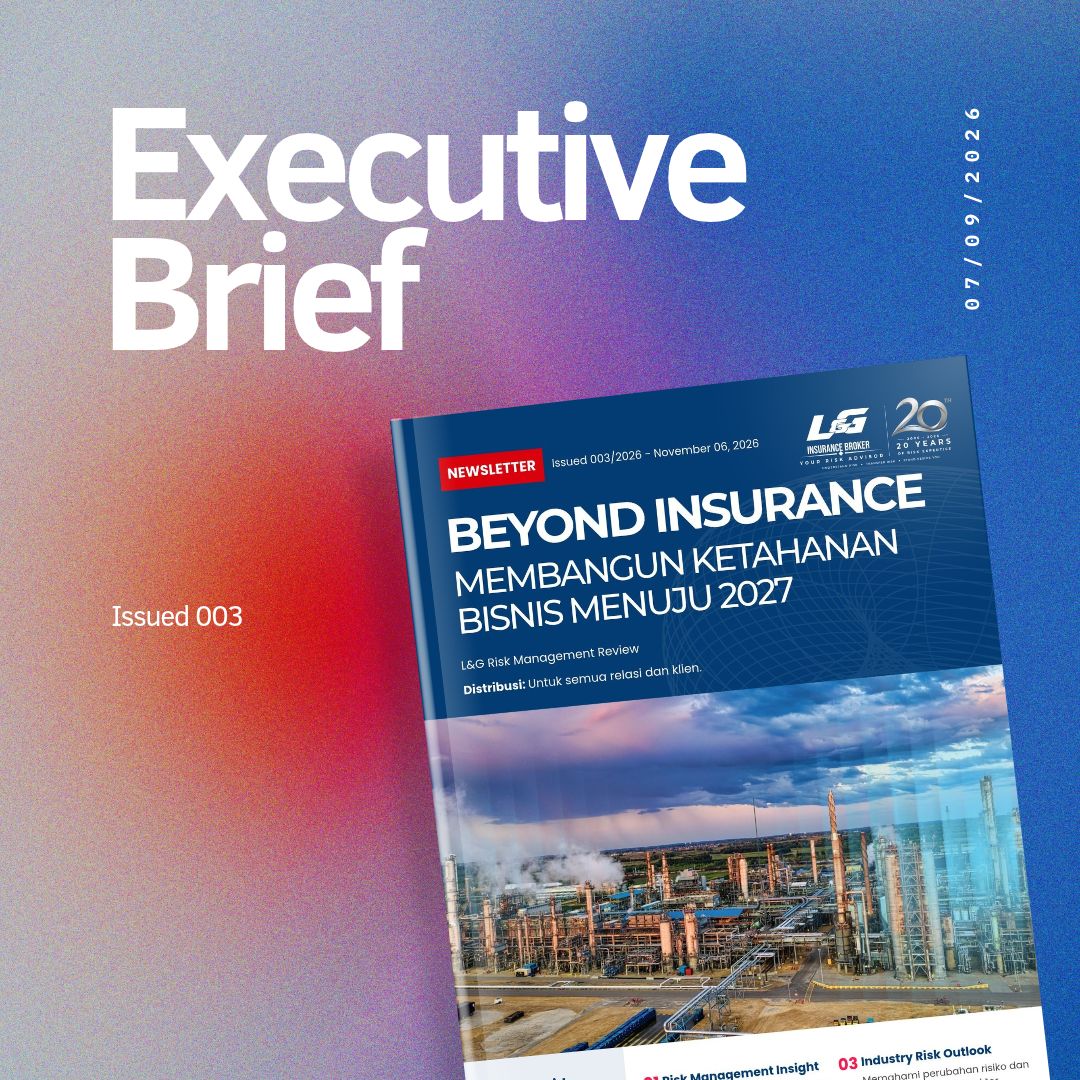
This article introduces some of the critical issues businesses should consider when preparing for 2027. For a broader perspective, explore the latest edition of L&G Risk Management Review – Issue 003/2026: Beyond Insurance – Building Business Resilience for 2027.

Inside this edition, you will discover:

  • Risk Management Insights: Hidden risks in business planning and seven essential year-end risk checks.
  • Real Claim Experience: How professional broker involvement helped achieve a Marine Cargo claim settlement of approximately Rp17 billion.
  • Industry Risk Outlook: Emerging risk developments across mining, power and renewable energy, construction and EPC, manufacturing, shipping and logistics, and oil and gas.
  • Insurance Knowledge: Understanding underinsurance and its potential financial consequences.
  • Business Resilience Checklist: Practical questions to help management assess business readiness for 2027.
DOWNLOAD THE FULL RISK REVIEW

DOWNLOAD THE FULL RISK REVIEW

Download the complete L&G Newsletter and gain a deeper perspective on the risks that may affect your business.

Download PDF

Terhubung dengan kami

Mari Diskusikan Kebutuhan Risiko Anda

Hubungi Omar untuk mendiskusikan kebutuhan asuransi dan solusi pengelolaan risiko Anda melalui halo@lngrisk.co.id atau WhatsApp.