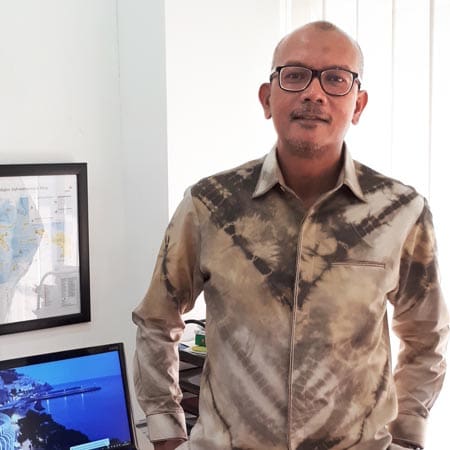
Direktur Utama
Indonesia remains one of the world’s important coal-producing countries. Behind every ton of coal produced lies a complex chain of activities involving mine planning, land clearing, overburden removal, coal getting, hauling, stockpiling, crushing, transportation and loading.
Each stage creates its own risk.
A mining operation may involve heavy equipment, workshops, fuel storage facilities, processing plants, conveyor systems, stockpiles, roads, bridges, camps, warehouses, power systems, weighbridges, ports and jetties.
These assets are not independent.
A fire at a workshop can damage equipment. A slope failure can block a haul road. Flooding can affect electrical infrastructure. The failure of a critical excavator can reduce the capacity of an entire production system.
In each case, the physical damage may be only the beginning.
The more important question is:
What happens to production when a critical part of the operation can no longer function?
For mining companies, risk management therefore needs to go beyond preventing accidents or protecting physical assets.
It needs to consider how the business can absorb, recover from and financially withstand an unexpected event.
The traditional view of mining risk often starts with the physical assets located at the mine site.
But a modern coal mining operation is better understood as an interconnected operating system.
It involves:
Mine + Heavy Equipment + Infrastructure + Processing + Stockpile + Transportation + Contractors + People + Utilities
Every component contributes to the ability of the mine to produce and deliver coal.
A failure in one area can therefore create consequences somewhere else.
A damaged workshop may reduce equipment availability.
A blocked haul road may reduce coal movement.
A failed conveyor may interrupt processing.
A flooded access road may prevent people, equipment or supplies from reaching critical areas.
A disruption at a port or jetty may affect delivery commitments even when the mining operation itself continues to produce.
The risk therefore does not stop at the mining pit.
It follows the entire production and delivery chain.
Mining is a capital-intensive business.
But the value of an asset does not necessarily represent the magnitude of the business risk created by its failure.
A high-value asset may have an alternative available.
A lower-value component may have no practical substitute and require months to replace.
This creates an important distinction between:
Asset Value
and
Production Dependency.
For mining management, understanding this distinction is essential to building a meaningful risk profile.
The question is not only:
“What assets do we own?”
It is:
“Which assets are critical to keeping production running?”
Mining starts with the ground.
That also means some of the most significant operational risks arise from geological and geotechnical conditions.
Open-pit mining can be exposed to:
A slope failure can damage equipment, block access roads and interrupt production simultaneously.
The financial impact may therefore be considerably larger than the physical repair cost.
For mining management, geotechnical risk should be continuously monitored rather than treated only as an issue during mine planning or feasibility assessment.
Heavy equipment is the engine of an open-pit mining operation.
Excavators, dump trucks, bulldozers, graders, wheel loaders and other equipment operate continuously under demanding conditions.
A single major equipment failure can immediately reduce production capacity.
The exposure becomes more significant when a mine depends on a limited number of high-capacity units.
The loss of one critical excavator, for example, may affect not only that machine but also the utilisation of several supporting haul trucks.
Equipment risk should therefore be evaluated not simply according to the replacement value of the equipment.
It should also consider:
How critical is this equipment to production?
Mining operations involve significant quantities of fuel, lubricants and combustible materials.
Workshops, fuel storage facilities, electrical installations and mobile equipment can therefore create substantial fire exposure.
Potential causes include:
The consequence of a fire may extend beyond the damaged facility.
If the affected facility supports critical production activities, the incident can result in equipment downtime, reduced production capacity and additional operating costs.
Fire protection, maintenance, emergency response and financial risk transfer should therefore be considered as interconnected elements of the overall risk-management framework.
Indonesia's geographical and climatic conditions create exposure to a range of natural events.
Mining operations may experience:
Flooding, for example, can affect much more than the mining pit.
It may damage:
The key issue is not simply whether a natural event can damage an asset.
It is whether the event can interrupt the operation.
A natural event can become a business-continuity event.
Coal stockpiles represent another important exposure within the mining value chain.
Large quantities of coal may be stored temporarily before transportation or shipment.
Potential risks include:
Stockpile management is therefore not simply an operational issue.
It can also become an asset-protection and business-continuity issue.
Risk assessment should consider the quantity stored, stockpile configuration, monitoring procedures, fire protection and emergency response capability.
The objective is not only to protect the coal inventory.
It is also to understand how a stockpile incident could affect production, delivery schedules and the company's financial position.
Coal does not generate revenue simply because it has been extracted.
It must reach the customer.
Transportation may involve:
A disruption at any point can affect production and delivery commitments.
This creates an important principle:
Mining risk management should extend beyond the pit.
The risk continues from extraction through transportation and ultimately to delivery.
Modern mining cannot separate operational performance from environmental responsibility.
Mining activities may create potential exposures involving:
The financial consequences of an environmental incident can extend beyond physical damage.
They may involve clean-up costs, third-party claims, regulatory obligations and other financial consequences.
Environmental exposure should therefore be considered alongside property and operational risks as part of the broader risk-management framework.
Mining operations interact with many parties.
These may include employees, contractors, suppliers, local communities, transport operators and other third parties.
An accident may therefore result in:
Third-party liability should be assessed together with the company's actual operations and contractual arrangements.
The important question is not only whether liability exists.
It is also:
Who is responsible, and how is that responsibility allocated?
Many Indonesian mines rely on contractors for activities such as:
This creates a shared-risk environment between the mine owner and its contractors.
Management should understand:
A weak contractual allocation of risk can create significant uncertainty when a major incident occurs.
Contractual risk should therefore be part of the overall mining risk assessment.

Physical damage is usually easy to see.
Business interruption is not.
Consider a fire that damages a critical processing facility.
The physical loss may be valued at Rp20 billion.
But if the facility cannot operate for several months, the financial impact may include:
The real exposure may therefore be significantly greater than the physical damage.
The relevant question is not simply:
“How much will it cost to repair the damaged asset?”
It is:
“How much will the business lose while the operation is unable to function normally?”
That is the difference between looking at asset protection and looking at business continuity.
A Rp10 billion asset that can easily be replaced may represent less business risk than a Rp5 billion component with a 12-month replacement lead time.
For each critical asset, management should understand:
This creates a more meaningful risk profile.
The objective is to identify the assets that can become production bottlenecks when they fail.
The financial consequences of a mining incident can develop across multiple layers.
Physical Damage
Damage to buildings, equipment, machinery, infrastructure or other property.
Repair or Replacement
The cost—and time—required to restore the affected asset.
Production Interruption
Lost production while the operation cannot function normally.
Additional Operating Expenses
Costs required to maintain or partially restore operations.
Third-Party Liability
Potential claims arising from bodily injury or property damage.
Environmental Consequences
Clean-up, remediation and other environmental-related costs.
Contractual Consequences
Potential financial consequences arising from disrupted contractual obligations.
Reputational Impact
The broader effect of a major incident on business relationships and stakeholder confidence.
This is why looking only at the repair bill can significantly underestimate the real financial exposure.
From L&G's perspective, mining insurance should not begin with the question:
“What insurance policy should we buy?”
It should begin with:
“What can prevent this operation from producing, and what would that interruption cost the business?”
There is no single insurance policy that protects an entire mining business.
Depending on the actual risk profile, an insurance programme may involve:
But these products should follow the risk assessment.
Insurance should be the result of risk analysis, not the starting point.
Mining companies should not evaluate insurance only by premium or headline limits.
Two policies with apparently similar limits can provide very different protection.
Important considerations may include:
Certain property policies may also contain specific treatment of perils such as subsidence, landslip and landslide, together with particular exclusions and deductibles.
This illustrates an important principle:
Policy wording matters as much as the headline sum insured.
Mining conditions change continuously.
The mine plan changes.
Production volumes change.
Equipment fleets change.
Infrastructure expands.
New contractors enter.
Stockpile levels change.
New projects are developed.
Insurance values change.
Risk management should therefore not be performed only at insurance renewal.
It should be a continuous management process.
This includes:
Risk Survey
Understanding the physical and operational exposure.
Gap Analysis
Identifying weaknesses between existing controls and the actual risk profile.
Policy Review
Assessing whether insurance protection reflects the underlying exposure.
Contractual Risk Review
Understanding the allocation of responsibility between owners, contractors and other parties.
Claims Advocacy
Supporting the recovery process when an insured event occurs.
Business Continuity Support
Considering how critical operations can be maintained or restored following a major disruption.
The objective is not simply to transfer risk.
It is to improve the company's ability to understand, mitigate, retain, transfer and recover from risk.
The traditional approach to mining insurance often asks:
“What assets do we have and how much are they worth?”
A stronger risk-management approach asks:
“Which assets are critical to our production?”
This is a different way of looking at risk.
The focus moves from the value of the asset to the consequence of its failure.
That means mining management should understand:
These questions help connect asset protection with operational continuity and financial resilience.
Instead of asking:
“How much insurance premium can we save?”
management should also ask:
“What level of financial loss can our business comfortably retain?”
That question leads to a broader discussion around:
The purpose of risk management is not to eliminate every possible loss.
It is to ensure that an unexpected event does not become an event that threatens the future of the business.
If a critical asset failed tomorrow, how long could the operation continue—and how much would the interruption cost the business?
If the answer is unclear, the risk assessment may not yet be complete.
Because in mining:
The biggest loss is not always the asset that is damaged.
Sometimes, it is the production that stops.
Understand the risk.
Protect the critical assets.
Prepare for business interruption.
Transfer the right risks.
Build resilience into the operation.
L&G Insurance Broker
Risk Management | Insurance Advisory | Claims Advocacy
Team
Direktur Utama
Direktur
Terhubung dengan kami
Hubungi Omar untuk mendiskusikan kebutuhan asuransi dan solusi pengelolaan risiko Anda melalui halo@lngrisk.co.id atau WhatsApp.