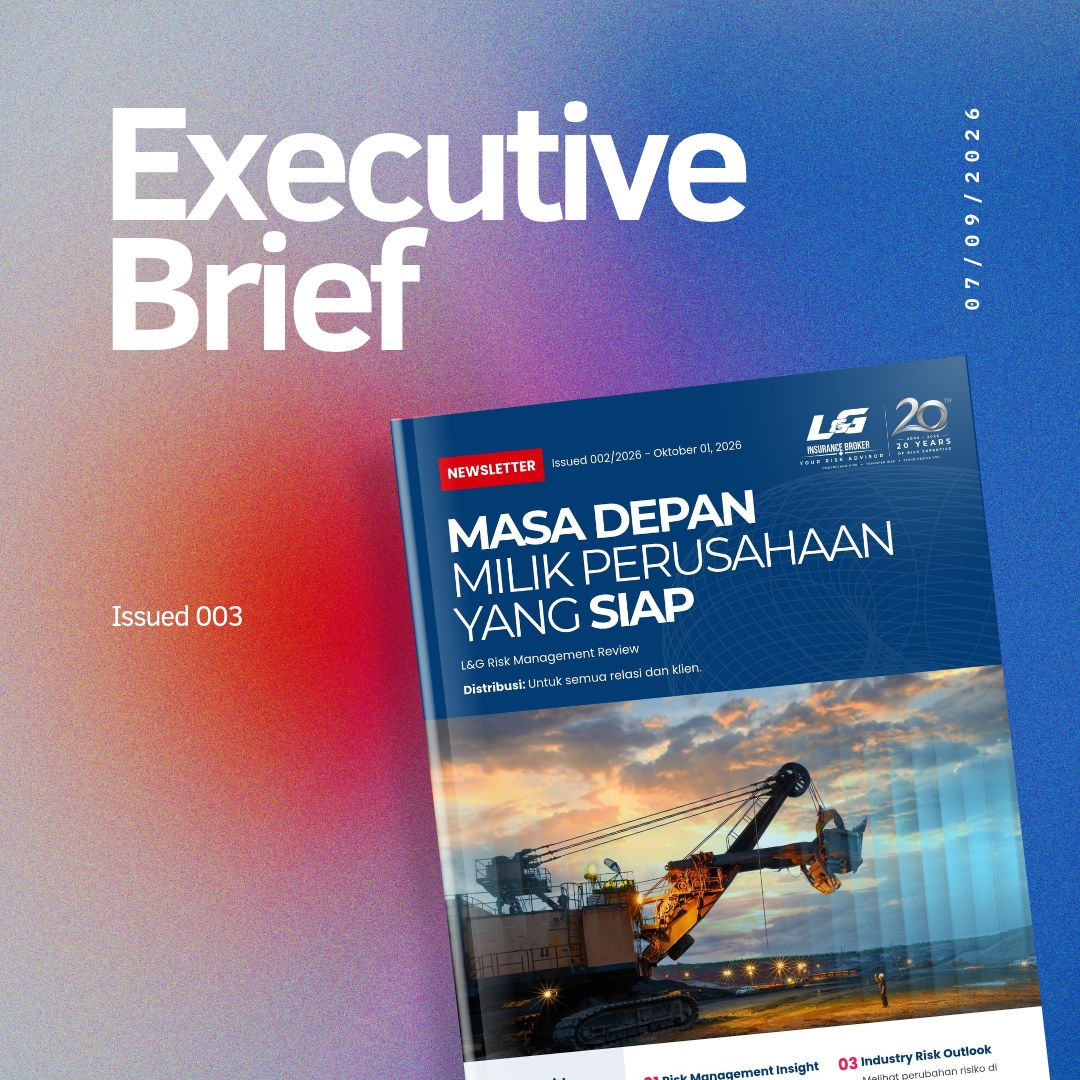
The Future Belongs To Companies That Are Prepared

Business environments are constantly changing, bringing new opportunities and risks. Companies must go beyond having insurance and develop a clear understanding of their exposures, operational vulnerabilities, and financial resilience. As industries evolve, preparedness becomes essential to protecting business continuity and long-term value.

Understanding Risk in a Changing Business Landscape

In an increasingly interconnected business environment, uncertainty has become part of doing business. Technological transformation, changing industry dynamics, geopolitical developments, and evolving operational demands are reshaping the way companies face risk. While opportunities continue to emerge, the ability to anticipate disruption and prepare for its consequences will increasingly determine which businesses remain resilient and sustainable.

A Changing Business Landscape Creates New Risks

A Changing Business Landscape Creates New Risks

Indonesia's business environment is experiencing significant transformation. Mining downstreaming, renewable energy investment, infrastructure development, manufacturing expansion, and digital transformation are creating new opportunities across industries.

However, these developments also increase operational complexity and introduce new risk exposures. Businesses are becoming more dependent on technology, critical equipment, supply chains, contractors, and interconnected infrastructure.

In this environment, understanding risk is no longer optional. Companies need to ensure that their risk management strategies evolve alongside their business activities.

Do You Really Understand Your Company's Risks?

Do You Really Understand Your Company's Risks?

Many companies have insurance policies worth billions of rupiah but cannot clearly identify the three biggest risks that could disrupt their operations.

This highlights the importance of a Risk Register—not merely a list of potential threats, but a structured tool to identify, assess, prioritize, mitigate, transfer, and monitor business risks.

Another frequently overlooked exposure is Business Interruption. Physical damage may be repaired, but revenue losses, fixed expenses, customer relationships, and supply chain disruptions can continue long after the incident.

The critical question is not simply whether your assets are insured, but whether your business can survive when operations are disrupted.

When a Small Incident Creates a Significant Financial Impact

The financial consequences of a risk can extend far beyond the initial physical damage.

Consider a real claim experience involving a Komatsu HD 785-7 mining truck. Initially estimated at approximately Rp2.8 billion, the claim developed into a more complex case involving damages of approximately Rp6.8 billion. Technical assessment, documentation, verification, and professional coordination became essential throughout the process.

Other exposures also deserve attention:

  • Mining: New equipment technologies introduce additional operational and battery-related risks.
  • Power & Renewable Energy: Emerging technologies and interconnected energy infrastructure create new reliability and business continuity challenges.
  • Construction & EPC: Delayed critical equipment can affect construction schedules, commissioning, and commercial operations.
  • Manufacturing: Dependence on critical machinery, utilities, technology, and supply chains increases production vulnerability.
  • Shipping & Logistics: Risks can emerge throughout cargo transportation, from loading and shipping to transshipment and final delivery.
  • Oil & Gas: Exploration, offshore operations, equipment failure, and environmental exposures require comprehensive risk management.

Understanding these exposures is essential to preventing operational disruptions from becoming significant financial losses.

Risk Management Must Come Before Insurance Placement

Risk Management Must Come Before Insurance Placement

At L&G, we believe that effective insurance protection begins with understanding the actual risks faced by a business.

Companies should regularly evaluate their risk profiles, review asset valuations, understand potential Business Interruption losses, assess contractual liabilities, and ensure that insurance arrangements reflect their actual exposures.

Equally important is understanding policy conditions, including deductibles, exclusions, limits, and other provisions that may affect claim settlements.

A well-designed insurance program should not simply protect physical assets. It should support the company's ability to recover, maintain operations, and preserve long-term business value.

As a Risk Advisor, L&G helps businesses identify, evaluate, mitigate, and transfer risks through a comprehensive approach.


Beyond Insurance

Know Your Risk. Prepare Your Business. Protect Your Future.

Risk cannot always be prevented, but its impact can be prepared for.

As businesses face increasing complexity and uncertainty, preparedness becomes a fundamental part of sustainable growth. Understanding what could go wrong, knowing how much loss the company can withstand, and having the right protection in place can make a significant difference when unexpected events occur.

For L&G, risk management is not just about protecting assets. It is about protecting operations, maintaining business continuity, and preparing businesses for the future.


EXPLORE MORE IN L&G NEWSLETTER

There is more to understand about today's changing risk landscape.

In L&G Risk Management Review – Issue 002/2026, we explore these topics further through practical insights, real claim experience, industry developments, and professional perspectives.

Inside this edition:

  • Risk Management Insights: Understanding Risk Register and Business Interruption.
  • Real Claim Experience: How a mining equipment claim evolved from Rp2.8 billion to Rp6.8 billion.
  • Industry Risk Outlook: Emerging risks across mining, energy, construction, manufacturing, shipping and logistics, and oil & gas.
  • Insurance Knowledge: Understanding deductibles and their impact on insurance claims.
  • Risk Checklist: Ten essential questions every CEO should ask about business risks.
  • L&G Update: Our 20-year journey, professional development, and commitment to advancing risk advisory services.

Download the October 2026 Newsletter and discover how better risk understanding can help your business prepare for the future.

L&G Insurance Broker

Understand Risk. Transfer Risk. Stand Beside You.

Always at your side.

DOWNLOAD THE FULL RISK REVIEW

DOWNLOAD THE FULL RISK REVIEW

Download the complete L&G Newsletter and gain a deeper perspective on the risks that may affect your business.

Terhubung dengan kami

Mari Diskusikan Kebutuhan Risiko Anda

Hubungi Omar untuk mendiskusikan kebutuhan asuransi dan solusi pengelolaan risiko Anda melalui halo@lngrisk.co.id atau WhatsApp.